
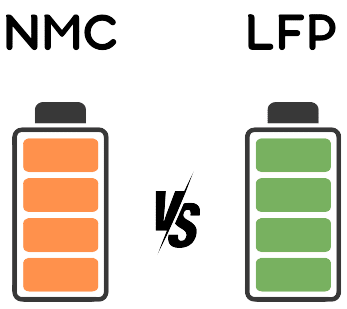
In the ever-changing world of electric vehicles, a major shift is taking place before our eyes. Automakers are gradually moving away from NMC (Nickel-Manganese-Cobalt) batteries in favor of LFP (Lithium-Iron-Phosphate) batteries. At CirculaCar, we are closely monitoring this transformation, which is reshaping the landscape of electric mobility.
The NMC batteries. have long been the benchmark in the electric vehicle industry. Their nickel, manganese, and cobalt composition gives them high energy density, enabling vehicles to achieve greater ranges: Tesla, BMW, and many other premium manufacturers have been using them for years.
The LFP batteries, on the other hand, use iron phosphate as the cathode. Less glamorous on paper, this technology is now making a real comeback thanks to significant technological advances. These same manufacturers have also switched several of their models to LFP batteries.
Why this change?
- A game-changing reduction in cost : The primary advantage of LFP batteries is economic. The absence of cobalt and nickel, two rare and expensive metals, reduces production costs. In a market where the cost of electric vehicles remains a major barrier to widespread adoption, this saving can amount to thousands of euros per vehicle.
- Enhanced security : LFP batteries offer superior thermal stability. They are less susceptible to thermal runaway, thereby reducing the risk of fire. For manufacturers and drivers alike, this provides significant peace of mind. Circulacar, for example, offers a battery with unmatched safety thanks to its R100 certification and three years of R&D.
- Exceptional durability : Where NMC batteries begin to show signs of fatigue after 1,000 to 2,000 charge cycles, LFP batteries can easily withstand 3,000 to 5,000 cycles, or even more. CirculaCar retrofit solutions can therefore extend the service life of industrial equipment by more than 8 years.
- Lower environmental impact : Without cobalt, whose extraction raises ethical and environmental questions, LFP batteries are part of a more responsible approach. Iron and phosphate are abundant materials and are easier to recycle.
The automotive giants make their choice
Tesla pioneered this movement, offering Model 3 and Model Y vehicles equipped with LFP batteries starting in 2021. Ford followed suit with its Mustang Mach-E, and more recently, Volkswagen announced the widespread integration of this technology into its ID range.
In China, where manufacturer BYD has perfected this technology with its Blade battery, LFP batteries are already used in the majority of electric vehicles sold.
At CirculaCar, we closely follow technological developments in order to offer you mobility solutions that are increasingly tailored to your needs. Our batteries, designed and developed by our teams, offer a wide range of configurations to suit every professional use.
They are :
- fully repairable,
- certified and patented,
- connected in series or in parallel,
- connected for optimal performance monitoring,
- customized according to the projects.
Better than just a battery, the associated connectivity allows you to upgrade your vehicle by enabling the user to upload essential CSR data, such as carbon emissions, number of kilometers traveled, etc. It also makes fault detection predictive, so that our after-sales service can intervene before any problems arise.

Do you have an electrification or battery integration project?