
The electrification of seaports is profoundly transforming the global port industry. Electric vehicles, handling equipment, and charging infrastructure: discover how French and European ports are adopting electric mobility to reduce their carbon footprint.
The port industry faces the challenges of energy transition
Seaports concentrate 90% of world trade and represent areas of intense activity where thousands of vehicles and handling equipment circulate daily. Faced with increasingly stringent environmental regulations and the 2050 carbon neutrality targets, the port industry is undergoing a major transformation : the complete electrification of its equipment and vehicle fleets.
This transition to electric port mobility addresses several crucial issues : reduction in greenhouse gas emissions, improvement in air quality, reduction in noise pollution, and optimization of operating costs.
Electric vehicles and material handling equipment: pioneers in port electrification
Des équipements portuaires 100% électriques
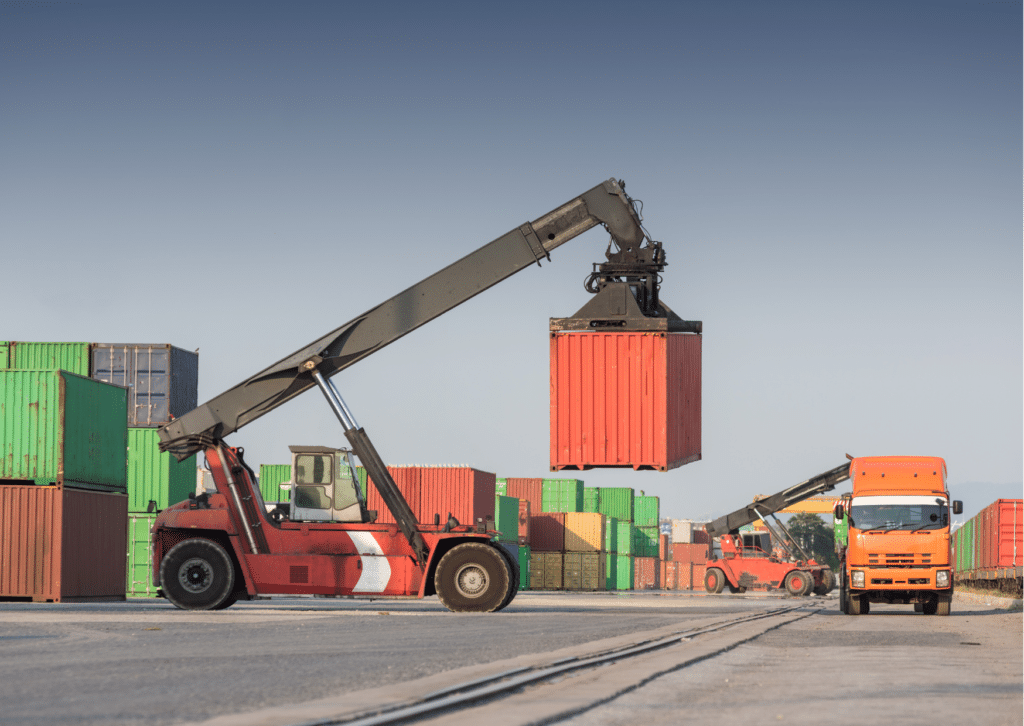
Electric forklifts are gradually replacing their diesel counterparts in European container terminals. An electric forklift truck emits up to 70% less CO2 than a combustion engine model over its entire life cycle.
The ports of Rotterdam, Hamburg, and Le Havre now show electrification rates above 60% for their fleets of material handling equipment. In addition to forklifts, electric port tractors and electric mobile cranes are becoming increasingly common, radically transforming the working environment for dockworkers.
The Arnal Group, which specializes in container depot management, has introduced two fully electric container trucks for handling empty containers at its Le Havre site. This is a first in France. These machines were manufactured by the Swedish group Kalmar and the Italian company CVS Ferrari, respectively, two brands that are innovating in carbon-free logistics by offering alternatives to diesel and hybrid forklifts. However, given the very high acquisition costs of this new type of vehicle, there is a much more economical and environmentally friendly solution : retrofit.
CirculaCar, a French company specializing in electrification, with extensive expertise in the airport and logistics industry , proposes a change in the propulsion system of port machinery to make it more environmentally friendly. The principle is simple: after studying the vehicle's usage cycle, CirculaCar offers an electric kit (battery + electric motor) specially sized for use, manufactured in France, fully repairable, and certified.
This provides the highest level of safety. After extensive testing, the electric kit is installed, giving this combustion engine vehicle a new lease of life as an electric vehicle and an additional ten years of operation..
At half the average cost of a new machine and available in less than six months, the industry can reach a new milestone while keeping its budget under control.
Electric shuttles: rethinking internal mobility
Large port areas are increasingly adopting electric shuttles for staff transportation. The Port of Marseille-Fos has deployed a fleet of electric minibuses, while Antwerp is experimenting with autonomous shuttles. Electric utility vehicles used by port services (maintenance, security, logistics) are also helping to create low-emission port areas.
Charging infrastructure: the backbone of the port transition
Without the right infrastructure, electrification is impossible. European ports understand this and are rolling out fast and ultra-fast charging stations on a massive scale, which are essential for maintaining the operational continuity of port equipment.
The investments match the ambitions. At the port of Rotterdam, ABB is building the world's largest port electrification system: 100 megavolt-amperes of capacity allowing 32 ships to connect simultaneously, with commissioning scheduled for late 2028 SNM.
Beyond charging stations, ports are developing a comprehensive approach : smart energy management systems, solar panels on warehouses, wind turbines, and energy recovery devices on container cranes.The goal is to create autonomous, carbon-neutral port ecosystems.
Green and sustainable ports: electrification boosting competitiveness
The economic argument for electric vehicles
Port electrification is a profitable strategic choice, generating concrete economic benefits :
- Maintenance costs reduced by 30 to 40% for electric vehicles
- Lower energy costs despite industrial electricity rates
- Extended service life of electrical equipment
- Reduction in carbon tax costs
The Port of Hamburg estimates a return on investment in less than seven years thanks to operational savings and European subsidies.
Attractiveness and ESG
Shipping companies are increasingly incorporating environmental criteria into their choice of port calls. Electrified ports are positioning themselves as responsible players and are becoming more attractive, in line with the European strategy to create low-emission port areas.
French ports leading the ecological transition
The Grand Port Maritime du Havre aims to have 80% of its vehicles electric by 2030 and is experimenting with innovative technologies such as second-life batteries.The port of Marseille-Fos, France's leading port for container traffic, has made electrification a priority in response to the region's air quality challenges.
Emerging technologies: the future of electric mobility in ports
Innovative ports are testing autonomous electric vehicles to automate certain logistics operations. Rotterdam is trialing autonomous electric port tractors that operate 24 hours a day.
To solve the challenge of recharge times, the industry is exploring interchangeable battery systems and induction charging,promising to eliminate the last remaining operational constraints.
CirculaCar: your partner for the electrification of your industrial fleets
At Circulacar, we understand the specific requirements of the port industry and professional sectors operating in challenging environments. Our certified, connected solutions, made in France, will meet these specific needs.
Whether you are a port operator, logistics company, or service provider, CirculaCar supports you in your transition to sustainable and efficient electric mobility. Circulacar offers an integrated approach that includes design, prototyping, mass production of components, and after-sales service.
Conclusion: port electrification, an irreversible trend
The electric revolution in the port industry is underway. With maritime transport responsible for nearly 3% of global CO2 emissions, the electrification of land-based port facilities is an immediate and measurable lever for action.
The seaports of the future will be electric, quiet, connected, and producers of green energy. The future of international trade depends on sustainable ports. And that future is being built today, one electric vehicle at a time.
Want to electrify your industrial fleet? Contact CirculaCar today to discover our electric mobility solutions tailored to your vehicles.